Local Consumer Review Survey 2026: What Rising Expectations Mean for Your Business
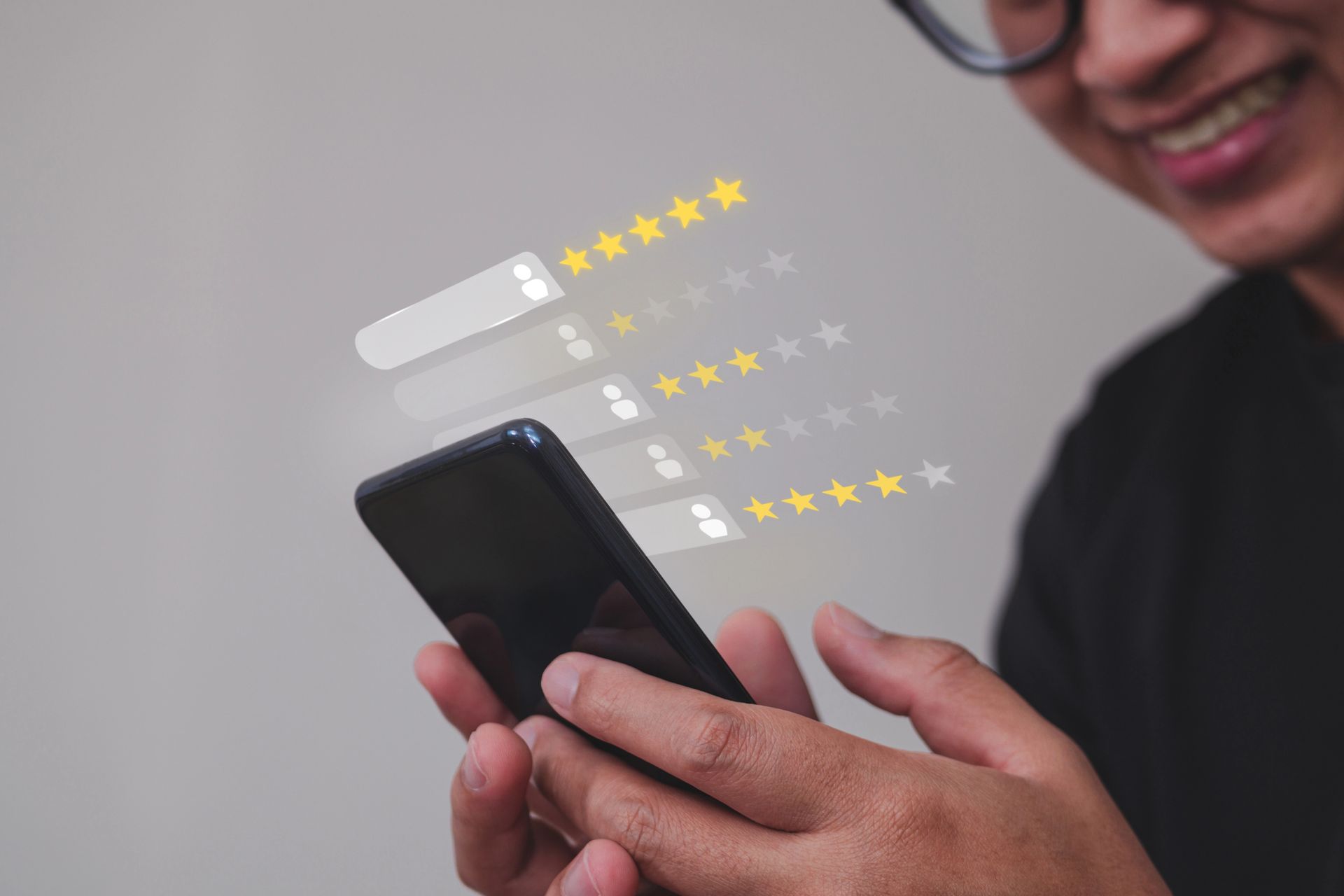
Online reviews aren’t just “important” anymore, they are now a foundational way for consumers to discover, evaluate, and choose local businesses.
According to the Local Consumer Review Survey 2026 by BrightLocal (Murphy, 2026), expectations around star ratings, review recency, response time, and authenticity are rising fast. Businesses that fail to adapt risk losing trust, visibility, and revenue.
Below is what the data shows and how we recommend businesses operationalize it in 2026.
Reviews Are Still Essential, But Discovery Is Changing
The data is clear:
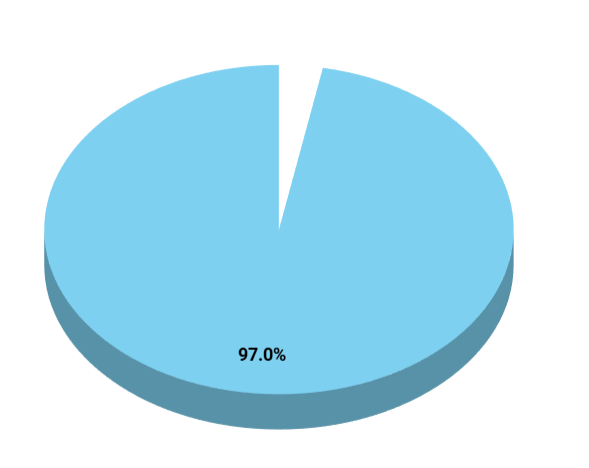
- 97% of consumers read reviews for local businesses.
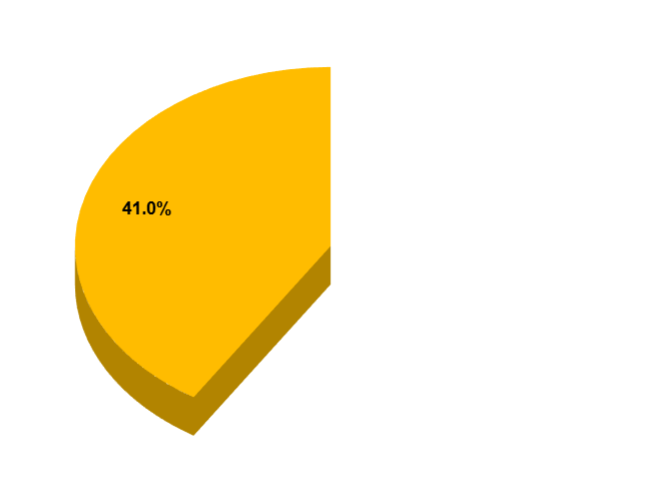
- 41% always read reviews before choosing a business (up from 29% last year).
- The average consumer uses six different review platforms.
While Google remains dominant, its usage dropped from 83% to 71%. Meanwhile:
- AI tools like ChatGPT surged from 6% to 45% usage for recommendations.
- Video platforms (YouTube, Instagram, TikTok) continue growing.
- Apple Maps nearly doubled in usage.
- Traditional platforms like Tripadvisor, BBB, and Trustpilot are resurging.
What This Means For Your Business
Review visibility is no longer just a Google Business Profile play. Your brand must be consistent and credible across multiple platforms, wherever customers and AI systems look.
Star Ratings and Recency Matter More Than Ever
Consumer expectations are rising sharply.
- 31% will only use businesses rated 4.5 stars or higher (up from 17% last year).
- 68% require at least 4 stars.
- 47% won’t use a business with fewer than 20 reviews.
- 74% only care about reviews written within the last 3 months.
- 32% look specifically for reviews written within the last 2 weeks.
Recency has become critical. Old reviews no longer build trust the way they once did.
What We See in Practice
Businesses that collect reviews in “bursts” often look stagnant between campaigns. Profiles with steady weekly review velocity convert better because they signal operational consistency.
Recommended Review Cadence
- High-volume businesses: 3–10 new reviews per week
- Mid-volume: 1–3 per week
- Low-volume: 2–4 per month consistently
Review velocity matters more than occasional spikes.
Reviews Drive Action - But Buyers Still Research
Reviews strongly influence buying decisions, but this does not always mean instant purchases:
- 85% are more likely to use a business after positive reviews.
- 77% are deterred by negative reviews.
- 93% have purchased after reading reviews.
- 27% have spent over $1,000 after reading reviews.
However:
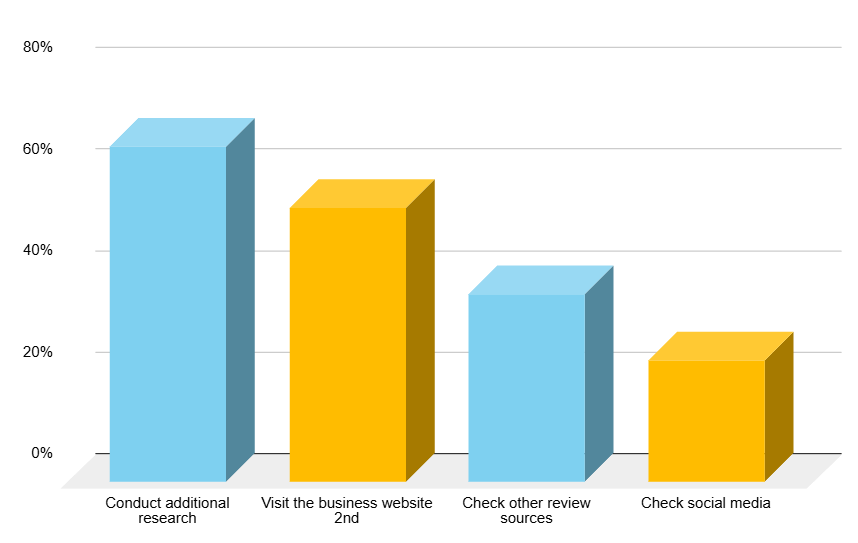
- 66% conduct additional research after reading reviews.
- 54% visit the business’s website next.
- 37% read more reviews.
- 24% check social media.
What This Means
Reviews are the entry point and not the finish line.
We regularly see conversion drop-offs when review sentiment is strong, but the website fails to reinforce the same messaging. If reviews emphasize “fast turnaround,” “transparent pricing,” or “exceptional service,” those claims should be echoed clearly on your website.
Trust must compound, not reset
Review Responses Influence Purchase Decisions
Consumer expectations around responsiveness have skyrocketed:
- 89% expect businesses to respond to reviews.
- 80% are more likely to use businesses that respond to all reviews.
- 42% avoid businesses that ignore reviews.
- 19% expect same-day responses.
- 81% expect a response within a week.
- 50% are turned off by generic or templated replies.
What Works
Responding to every review is now the baseline. Speed and personalization differentiate you.
Here’s a simple structure we recommend:
Positive Review Response Framework
- Thank them by name
- Reference the specific product/service
- Reinforce your brand value
- Invite them back
Negative Review Response Framework
- Acknowledge the concern.
- Take responsibility (where appropriate).
- Offer offline resolution.
- Keep tone calm and professional.
Generic templates reduce trust. Use structure, but personalize.
AI Is Becoming a Major Trust Channel
AI-powered recommendations are rising fast:
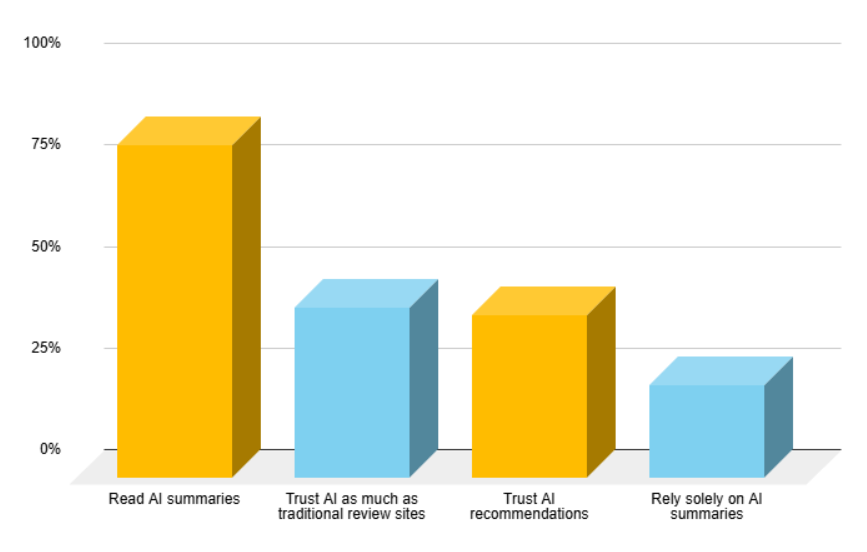
- 40% trust AI platforms for recommendations.
- 42% trust AI as much as traditional review sites.
- 82% read AI-generated review summaries.
- 23% rely solely on AI summaries to make decisions.
Consumers are increasingly interacting with AI summaries before reading full reviews.
Making Your Business “AI-Ready”
AI tools pull from:
- Review sentiment consistency
- Structured business information (NAP, hours, services)
- Website clarity
- Citation consistency
- Top recurring review themes
If your reviews consistently mention “professional,” “responsive,” and “transparent pricing,” those themes are more likely to appear in summaries.
Strong, consistent sentiment shapes how your brand is described and not just how it ranks.
Fake Reviews and Compliance Risks
Consumers are demanding accountability:
- 97% believe businesses should face punishment for fake reviews.
- 57% believe violators should be banned from review platforms.
- 46% believe they should be removed from Google search.
- 63% believe review platforms are responsible for detection.
- 49% believe businesses are responsible for monitoring and reporting fake reviews.
With FTC regulations in place, manipulating reviews carries real legal and reputational risk.
Best Practices
- Ask every customer, not just the happy ones
- Monitor and report suspicious activity
- Never request a “5-star review”
- Never incentivize positive-only reviews
Reputation integrity now directly affects long-term brand equity.
Consumers Are Willing to Leave Reviews, If You Ask
- 94% are open to writing reviews.
- 69% wrote at least one in the last year.
- 83% of those asked left one.
The biggest takeaway: Asking works. But it must be systematic.
The 4-Part Review Engine We Recommend
Instead of one off “review campaigns,” build an ongoing system:
1. Ask at the Right Moment
Trigger requests immediately after service completion or a positive customer interaction.
2. Remove Friction
Use direct links, QR codes, SMS requests, and one-click prompts.
3. Respond Fast and Personal
Aim for same-day or next-day replies.
4. Track and Optimize
Measure:
- Average rating
- Review velocity
- Response time
- Platform distribution
Reputation is now an operational function, not just a marketing tactic.
30-Day Implementation Plan
Week 1: Audit all platforms, fix inconsistencies, and identify rating gaps
Week 2: Implement automated review request flow (email/SMS)
Week 3: Train team on response SOP + expand to secondary platforms
Week 4: Measure rating movement, response time, and review growth
Repeat monthly.
The New Standard
Reviews in 2026 are:
- More immediate
- More scrutinized
- More AI-influenced
- More legally regulated
- More tied to high-value purchases
Businesses that treat reputation management as a continuous growth system and not a reactive task will outperform competitors who treat reviews as passive feedback.
If you are interested in seeing your business's reputation across important review sites,
get a free seo report here!
Source
Murphy, R. (2026). Local Consumer Review Survey 2026: Star Ratings Keep Rising, Old Reviews Don’t Cut It. BrightLocal. Retrieved from: https://brightlocal.com/research/local-consumer-review-survey
More Integrated Marketing Insights from CCC