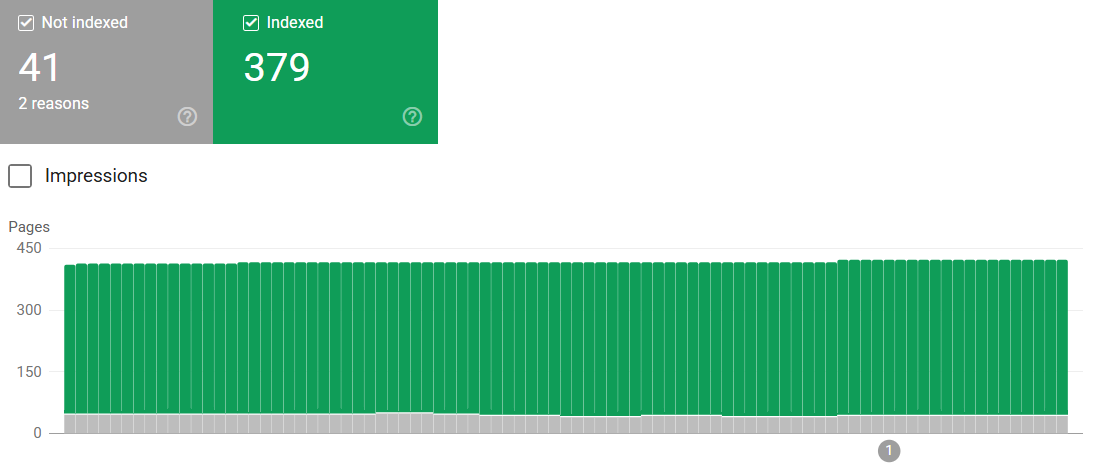

Why AI Is Not a Replacement for Quality Content Strategy
One of the biggest mistakes I am seeing right now is businesses treating AI like a content replacement engine instead of what it actually is: a tool.
Used properly, AI can absolutely help with ideation, outlining, research support, and drafting. But if the strategy is simply to use AI to mass-produce content at scale, I think that is the wrong lesson entirely.
That is also the core point Pedro Dias makes in his article, You’re Not Scaling Content. You’re Scaling Disappointment. He argues that the SEO industry keeps repeating the same cycle: a new tool appears, people use it to mass-produce pages, and then convince themselves volume will overcome the lack of quality. He points to past waves like content spinning, programmatic SEO, and now AI-generated content at scale as different versions of the same flawed playbook.

The Problem Is Not AI. The Problem Is Low-Value Content at Scale
This is the part I think businesses need to hear clearly: AI is not the problem. Low-value content at scale is the problem.
Google’s spam policies are very explicit that “scaled content abuse” occurs when many pages are generated primarily to manipulate search rankings rather than help users, and that this applies regardless of how the content is created. In other words, low-value content does not become acceptable just because it was produced faster or with better grammar.
Thus, I would not position AI as a replacement for a real content strategy. If the output is thin, repetitive, unoriginal, or built mainly to capture search traffic, the delivery method does not save it.
Publishing More Pages Does Not Mean You Are Creating More Value
One of the strongest points in Dias’ piece is that uniqueness is easy, but usefulness is hard. He argues that simply producing more pages does not mean you are creating more value for readers. The real question is whether your content offers something a user cannot already get elsewhere. That distinction matters.
A business can publish 100 AI-assisted blog posts, but if those posts say the same thing as every other page already in the index, they are not building authority. They are just adding more noise. Dias describes this as hitting a “qualitative wall,” meaning there is a minimum threshold of genuine value below which no amount of volume helps.
From my perspective, that is exactly the conversation businesses should be having right now. Not “How many pages can AI help us publish?” but “How do we create content that is actually worth reading?”
Mass AI Content Is Usually a Strategy Problem, Not an Efficiency Win
A lot of businesses are being sold the idea that AI content creation means they can produce content faster, more cheaply, and at a much higher volume.
The problem is that once you still have to review it for accuracy, edit it for clarity, improve it for originality, align it with your brand, and make sure it actually helps the reader, much of that “efficiency” starts to disappear. Dias argues that the tool changed, but the wall it crashes into did not.
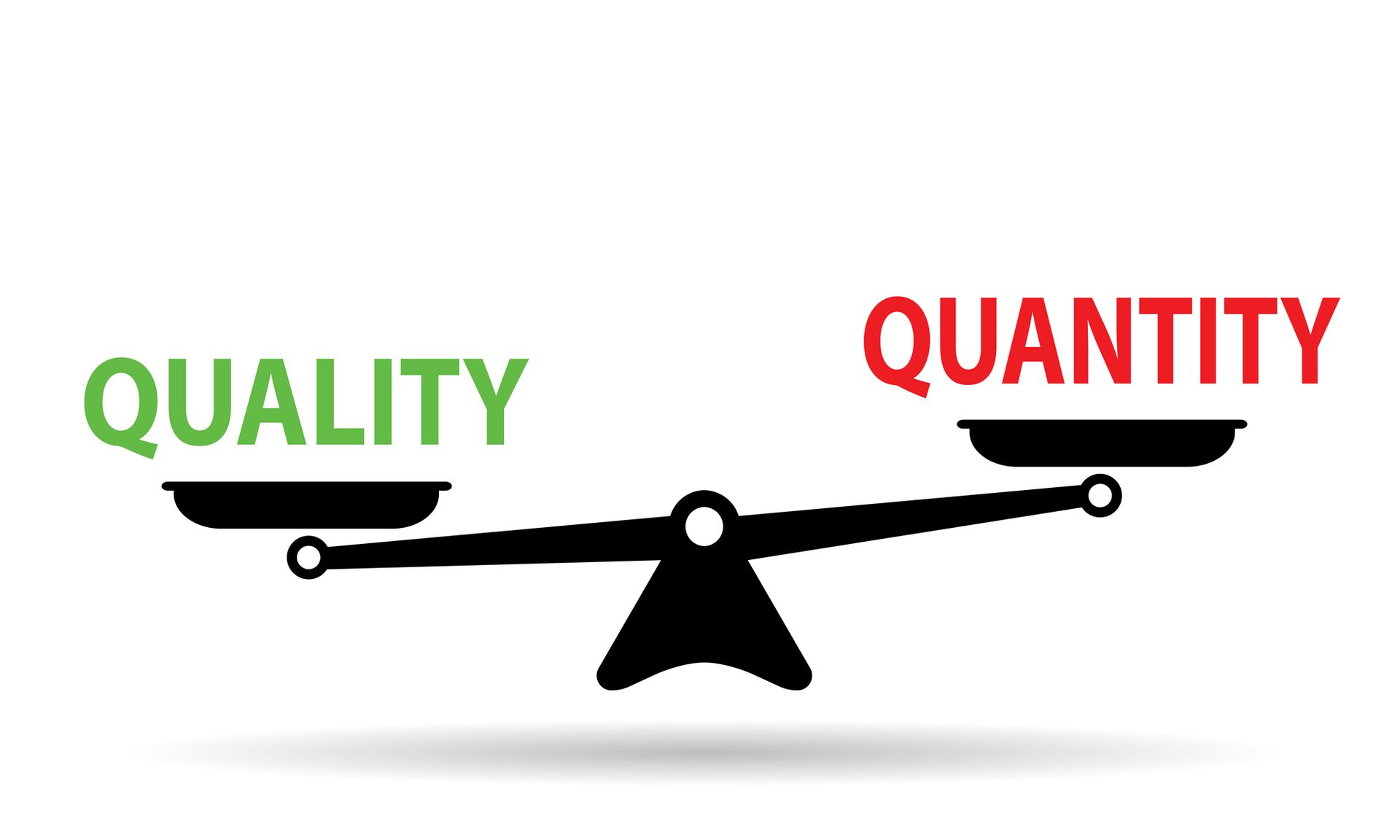
AI can reduce friction in parts of the workflow, but it does not eliminate the need for judgment. It does not replace subject-matter expertise. It does not replace editorial standards. And it definitely does not replace having something useful to say.
Thin Content at Scale Can Hurt More Than It Helps
This is another point that often gets missed. Dias argues that low-utility content does not just quietly sit there and fail. It can also create noise that gets in the way of your better content. He cites research on LLM-era retrieval showing that distracting, low-value passages can pull retrieval systems off track and degrade the quality of answers. His point is that if your site is filled with hundreds of thin pages, you may be weakening your own stronger pages rather than helping them.
That matters even more now because content is not only competing in traditional search results. It is also increasingly part of AI retrieval and summarization systems. So from a business standpoint, flooding your website with mediocre content is not just a neutral experiment. It can become a visibility problem.
Google Has Already Drawn a Line Here
Google formally added scaled content abuse to its spam policy framework, defining it as the creation of many pages primarily to manipulate rankings rather than to help users. Google’s public documentation makes clear that the issue is the intent and lack of value, not whether a human or AI wrote the first draft.
Dias also points to Google's actions against scaled, AI-heavy publishing patterns, arguing that the risk is no longer hypothetical. His broader warning is that many of these “scale” strategies may appear to work temporarily, but they tend to follow the same pattern: worked until it did not. That is exactly why I would be very cautious about any content strategy built primarily around volume.
Where I Think AI Actually Fits in Content Marketing
I am not anti-AI at all. I think AI is useful when it supports quality, not replaces it.
For example, AI can help with:
Brainstorming topic ideas
Building first-draft outlines
Summarizing research
Identifying gaps in existing content
Speeding up repetitive writing tasks
Helping teams move faster once a strategy is already clear
Where I think businesses get into trouble is when they confuse assistance with substitution. AI can help a good content team work more efficiently. It does not turn weak strategy into a strong one, nor does it turn generic ideas into authoritative content.
What Businesses Should Focus on Instead
If I were advising a business on content right now, I would be far more interested in publishing fewer, better pieces than scaling out dozens of average ones.
That means focusing on content that has:
- Real expertise
- Clear usefulness
- Original framing or insight
- Strong structure
- Alignment with actual customer questions
- Enough quality control to protect the brand
In my opinion, that is where AI can be most helpful: making a strong process more efficient, not replacing the process itself.
What This Means for Your Business Moving Forward
The biggest takeaway here is simple: AI is a content tool. It is not a content strategy.
If your business uses AI to support quality, improve efficiency, and strengthen useful content, that can be a smart move. But if the plan is to use AI to flood your site with mass-produced pages in hopes of winning on volume, I think that is the wrong path.
Search has seen this pattern before. The technology changes. The promise sounds new. But the outcome is usually the same: low-value content scales faster, disappointment scales with it, and eventually the strategy runs into a wall.
The businesses that will get the most out of AI are not the ones replacing writers, editors, and strategists with mass production. They are the ones using AI carefully within a process that still values expertise, originality, and usefulness. That is where I think the real opportunity is.
Sources
- Pedro Dias, You’re Not Scaling Content. You’re Scaling Disappointment. The Inference
- Google Search Central, Spam Policies for Google Web Search
- Google, New ways we’re tackling spammy, low-quality content on Search
More Integrated Marketing Insights from CCC