
How Long Does Google Take to Index a Page? New Data Puts the Timeline in Perspective
When a new page does not appear in Google right away, it is natural to wonder whether something is wrong. Google recently shared internal timing estimates for crawling, indexing and updating search results. The numbers offer useful context, but they are reference points, not deadlines.
Google Search moves through several stages
Before a page can appear in search results, Google needs to find its URL, crawl the page, process its content and decide whether to include it in the index. After that, Google may update the title or snippet people see in search.
These steps are connected. A page cannot be indexed before Google crawls it, and a page Google hasn't discovered cannot enter the crawl and indexing process. A delay early in the process can carry through to later steps.
What timelines did Google share?
At Google Search Central Live Deep Dive Europe in Barcelona, Google’s Gary Illyes presented timing ranges based on Google’s internal analysis. The figures below were reported by event attendee John Campbell of ROAST and summarized by Search Engine Journal.
| Search Process | Typical Time Reported | Slowest Time Reported |
|---|---|---|
| Discover a new URL | About 20 hours | Weeks to never |
| Refresh a URL Google already knows | About 30 days | Weeks to never |
| Process a sitemap | About 24 hours | Up to 14 days, or never in some cases |
| Render a page | Seconds to render, with hours in a queue | Days to weeks |
| Complete end-to-end indexing | About 1.5 hours | Months, or never in some cases |
| Process a canonicalization change | 1–3 weeks | Months when signals conflict |
| Update a title or search snippet | 1–2 days | Several weeks to months |
The 1.5-hour estimate for end-to-end indexing should not be read as a promise that a newly published page will appear in Google within 90 minutes. It describes the indexing process once the URL reaches that stage. Discovery and crawling happen earlier, and Google may take longer to revisit a page it already knows about. The estimates also came from an event presentation reported by an attendee; Google did not publish a public dataset defining the sample, measurement period or exact meaning of “typical.”
Crawling, indexing and ranking are different
These terms describe different steps:
- Crawling is when Googlebot visits a URL and fetches its content.
- Indexing is when Google analyzes the page and may store it in Google’s index.
- Ranking is how Google selects and orders eligible pages for a particular search.
A page can be crawled without being indexed. It can also be indexed without ranking prominently for the searches that matter to your business. Google says it does not guarantee that it will crawl, index or serve any specific page, even when the page follows its guidelines.
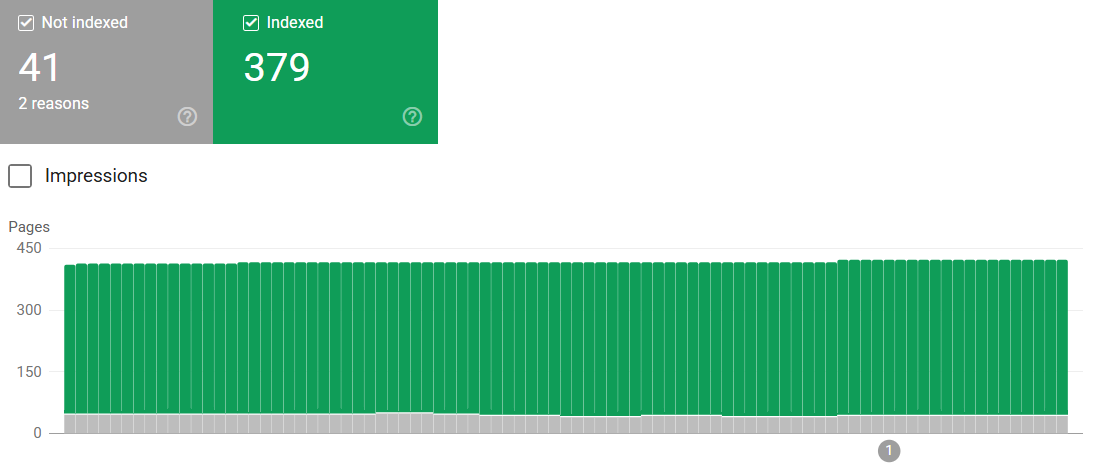
That distinction is important when reviewing Search Console. “Discovered – currently not indexed” means Google knows the URL but has not indexed it. “Crawled – currently not indexed” means Google visited it but did not add it to the index at that point. Those statuses call for different investigation than a page that is indexed but receives little visibility.
Why might a page take longer or stay out of the index?
Timing is only part of the explanation. Google may be unable to access a page, may see conflicting signals about which URL should be indexed, or may decide the page does not provide enough distinct value to include.
Common checks include:
- Can Google access the page? Confirm it returns a successful status, does not require a login and is not blocked by robots.txt.
- Is indexing allowed? Check for a noindex directive in the page’s HTML or HTTP headers.
- Is the URL included in the right sitemap? Sitemaps can help Google discover URLs, but submitting one does not guarantee indexing.
- Can Google find it through internal links? Link to important pages from relevant, crawlable pages on your site.
- Are canonical signals consistent? The sitemap, canonical tag, redirects and internal links should point to the preferred URL.
- Does the page add useful, distinct information? Thin, duplicated or near-identical pages may not earn a place in the index.
- Can Google render the main content? Review the rendered page if important content depends on JavaScript.
What should you do after publishing or updating a page?
For a small number of important URLs, use Google Search Console’s URL Inspection tool to check whether Google can access the page and request a crawl. For a larger group of URLs, make sure the XML sitemap is current and submitted. Then check the relevant Page Indexing report and inspect the page again after allowing time for Google to revisit it.
Repeatedly requesting indexing for the same URL does not make Google crawl it faster. A request is a prompt, not a priority guarantee. If a page remains excluded, investigate the reason shown in Search Console instead of resubmitting it without changes.
If the issue affects many pages, look for a shared cause: a robots.txt rule, a noindex setting, a site migration, inconsistent canonical tags, weak internal linking, server errors or a large set of similar pages. A pattern across URLs often points to a sitewide or template issue that needs to be fixed at its source.
What this means for your SEO timeline
Google’s estimates help set more realistic expectations. Some search result updates may happen within a day or two, while a canonical change may take weeks to settle, and a known URL may not refresh on the schedule a site owner expects. The slowest cases in the reported ranges extend much longer, and some pages may never be indexed.
That does not mean every delay is normal or that teams should simply wait. It means indexing needs to be diagnosed in context: check access, technical directives, canonical signals, internal links and page value, then monitor how Google responds. For clients, this also helps separate work completed on the website from the time Google’s systems need to process and reflect that work.
Indexing is a prerequisite for visibility in Google Search, but it is not a ranking guarantee. A sound SEO process makes pages accessible, helps Google understand which URLs matter and gives each important page a clear reason to be included. From there, performance still depends on relevance, competition and the quality of the result for the searcher.
More Integrated Marketing Insights from CCC